



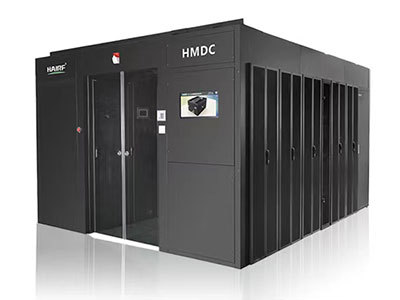
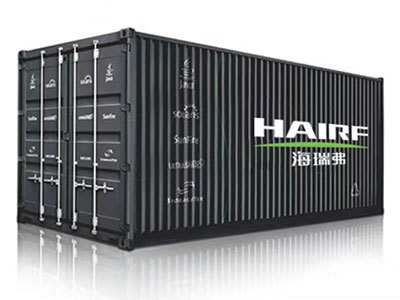




HLCDC Liquid Cooling Data Center
- Commodity name: HLCDC Liquid Cooling Data Center
- Commodity ID: HLCDC Liquid Cooling Data Cente
Category:
Liquid cooling uses chilled water instead of air to capture and transport heat away from chips. It can offer better performance while saving energy and helping data centers operate more sustainably. Liquid provides a much greater heat transfer capacity than air, which helps increase power usage effectiveness (PUE), reducing energy costs and contributing to environmental sustainability. Liquid can also be brought closer to the source of heat (the chip) than air, further increasing efficiency. Liquid cooling can also help data centers increase capacity within their existing footprint and offer a favorable return on investment for data center facilities. Liquid cooling systems provide an effective solution for achieving the required temperature parameters and reducing the energy consumption of cooling systems while increasing chip density.
Product Details
Advantages
1. Liquid has far higher heat-transfer efficiency than air
Water is ~3,500x more effective at absorbing heat than air.
2. Allows for much higher rack densities
GPU clusters generate intense, localized heat that liquid cooling can dissipate directly at the source.
3. Reduced energy consumption
Fewer fans → lower power usage → improved PUE.
4. Enables denser footprints in power-scarce markets
When power is constrained, maximizing compute per square foot is critical.
5. Mitigates thermal unpredictability of AI workloads
AI inference vs training varies dramatically in heat output; liquid cooling handles extremes more gracefully.
6. Supports sustainability goals
Liquid cooling can integrate with heat reuse strategies and district heating systems.
7. Aligns with hyperscaler and chipset roadmaps
NVIDIA, AMD, and Intel all design next-gen chips with liquid cooling in mind.
In short: AI workloads require it, and power constraints demand it.
Product Consulting

Copyright Clarify:
copyright ownership belongs to Hairf Company, shall not be reproduced, copied,or used in other ways without permission.Otherwise, Hairf Company will have the right to pursue legal responsibilities.
Serial NO.:HFSZC171008

+86 13910733790
East of Huishan Road, Shuangfeng Development Zone,Hefei City, Anhui Province, China
ONLINE MESSAGES
copyright © 2022 Hairf Company


